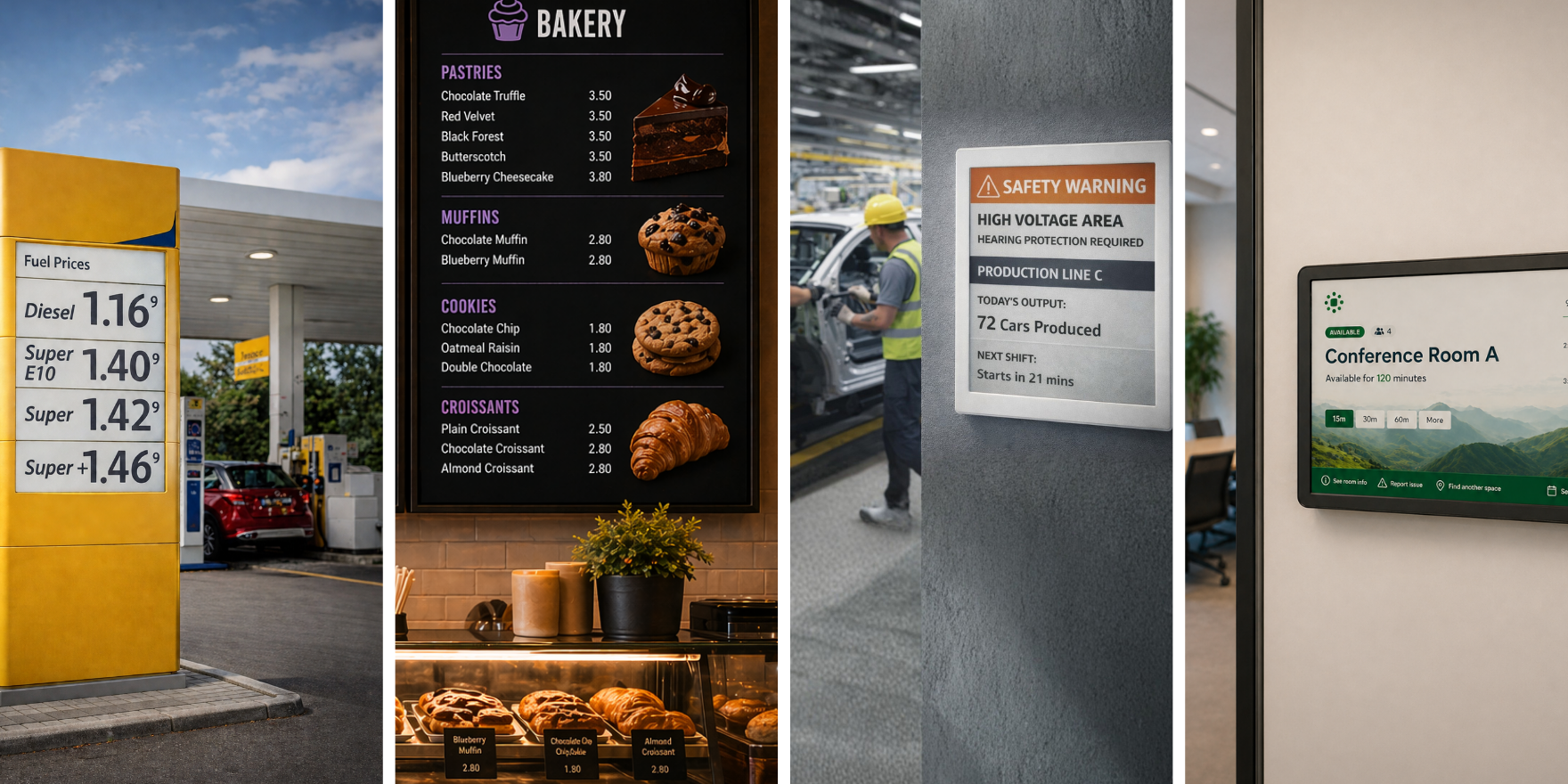
Across industries, organisations still rely heavily on printed materials to communicate information that changes frequently. Operational notices. Safety instructions. Menus. Pricing boards.
These are printed, distributed, and replaced repeatedly, often becoming outdated faster than they can be noticed. While this has long been accepted as routine, it represents a growing disconnect between how dynamic modern operations are and how static communication methods remain.
This is where the shift toward digital, and more specifically e-paper, becomes not just relevant, but necessary.
The Persistence of Print in a Real-Time World
Despite rapid digital transformation across systems and workflows, communication at the physical layer often lags behind. Printed materials continue to be used because they are:
- Simple to deploy
- Familiar to teams
- Easy to understand
However, this simplicity comes at a cost. Every update requires manual effort. Every change introduces delay. And every printed output has a lifecycle that is inherently inefficient. In environments where information changes throughout the day, this approach creates friction, both operationally and environmentally.
Where Static Communication Breaks Down
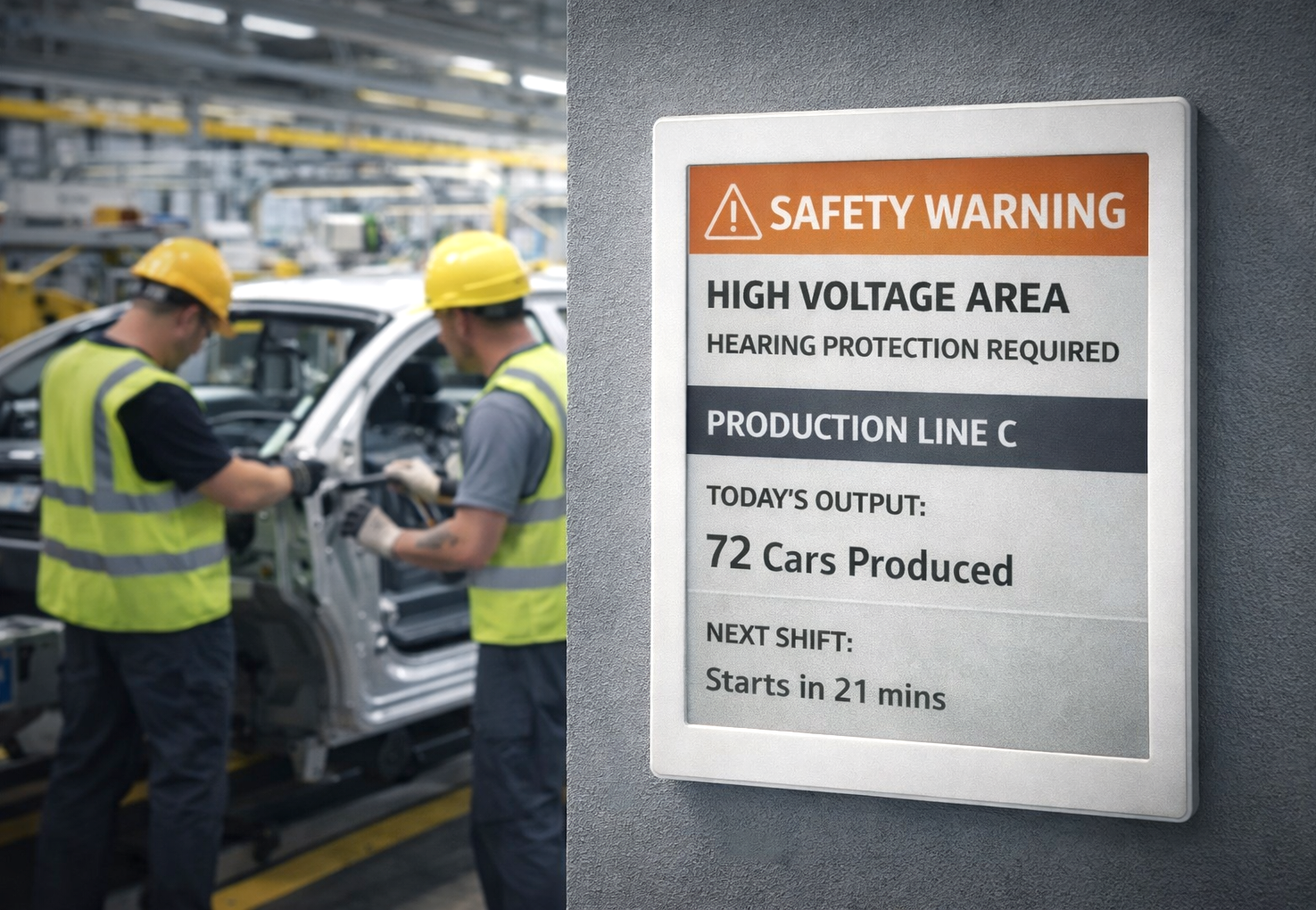
Consider a typical industrial or workplace setting. Safety instructions, production updates, and shift information are often displayed on printed boards. These are critical, time-sensitive updates, yet they rely on manual replacement. A similar challenge appears in office environments.
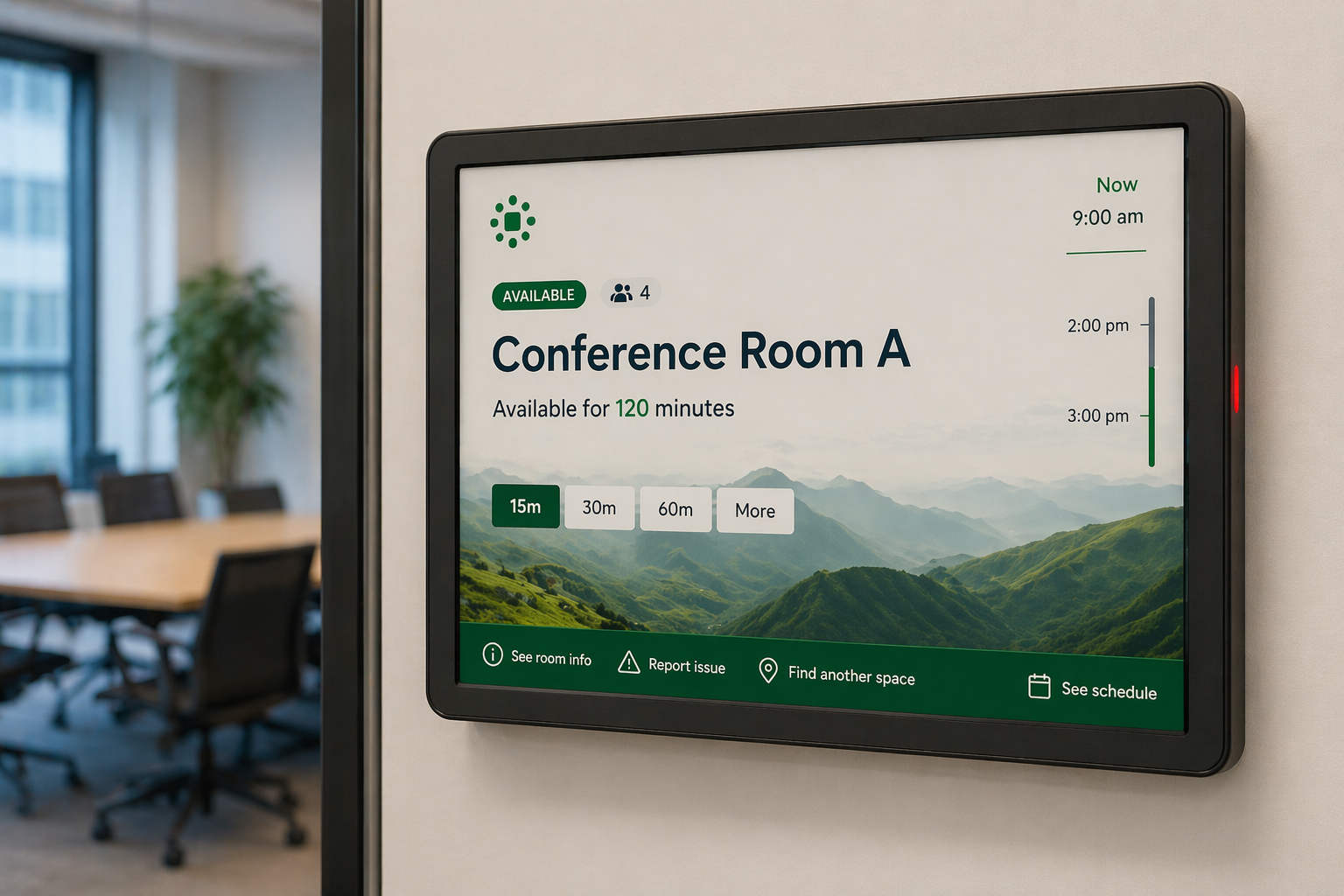
Meeting room schedules, availability, and bookings change constantly, but printed schedules or static displays fail to reflect real-time usage. Across both scenarios, the issue is the same, information changes faster than the medium used to display it.
The Role of Digital Signage
Digital signage platforms such as PADS4 address this gap by enabling real-time, centralised communication. Instead of relying on manual updates, organisations can:
- Push changes instantly across locations
- Maintain consistency in messaging
- Automate content based on time, data, or triggers
- Reduce operational dependency on physical processes
This transforms communication from static to responsive. However, traditional digital screens are not always the ideal solution, especially in scenarios where:
- Content does not require animation
- Power consumption must be minimal
- Displays need to remain visible for long durations

E-Paper: Bridging Simplicity and Digital Control
E-paper displays offer a unique middle ground. They retain the clarity and readability of print, while enabling digital updates without constant power usage.
In retail and hospitality environments, menus and product displays are frequently updated. E-paper enables these updates without reprinting, while maintaining a clean, paper-like aesthetic.
From Devices to a Connected Ecosystem
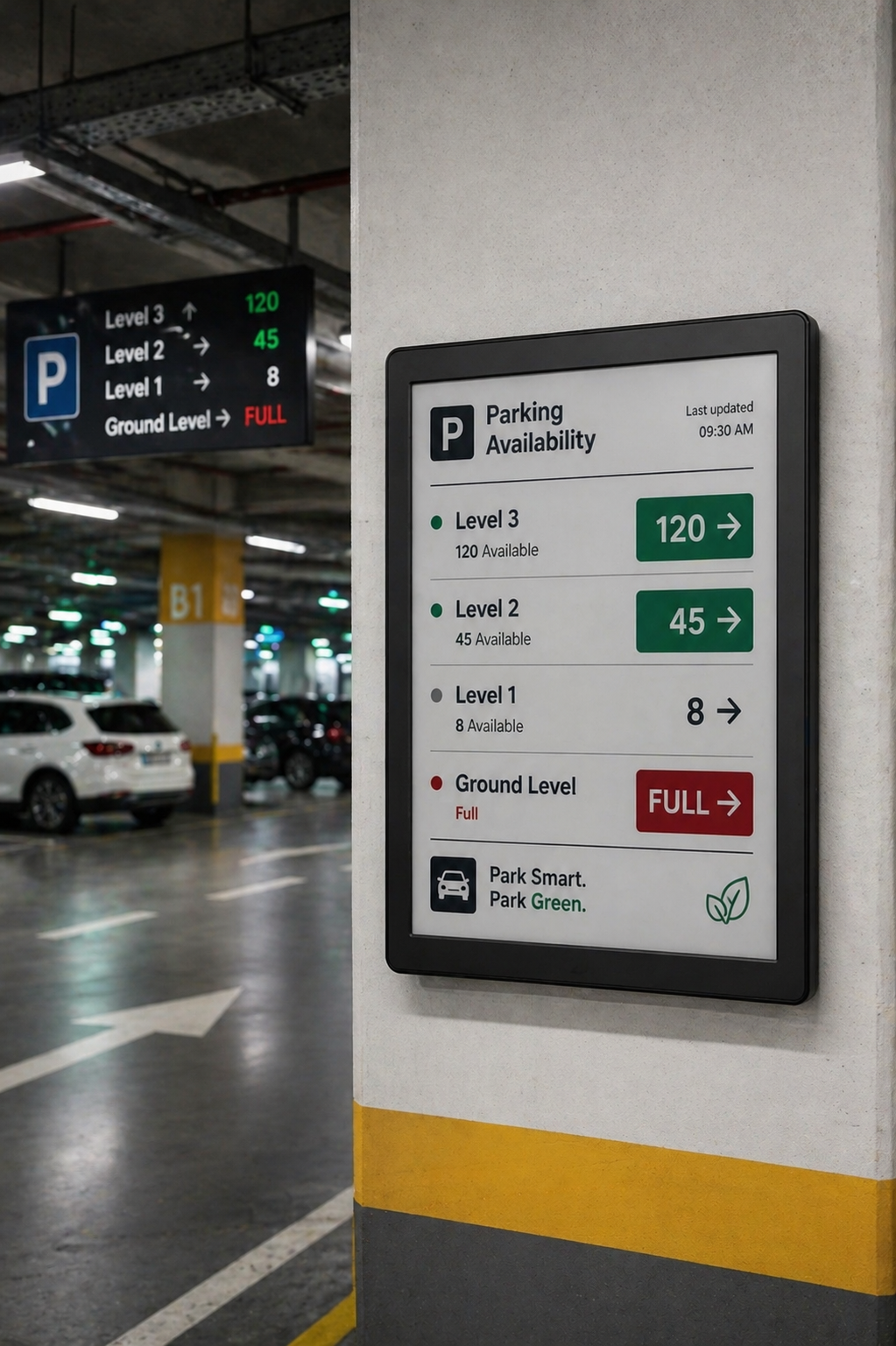
While e-paper hardware enables the display, the real transformation happens when it is connected to a central platform. With PADS4, organisations can manage all the below within a single ecosystem:
- Digital screens
- E-paper displays
- Data-driven content
This creates a unified communication layer where:
- Content is controlled centrally
- Updates are deployed instantly
- Different display types work together seamlessly
Rather than operating in silos, communication becomes integrated and scalable.
Moving Beyond Paper Reduction
Sustainability is often framed in terms of reducing paper usage. But the more meaningful shift lies in rethinking how communication systems function altogether. Replacing print with digital, and extending that further with low-power technologies like e-paper, enables organisations to:
- Reduce material waste
- Lower operational overhead
- Improve accuracy of information
- Respond faster to real-world changes
It is not just an environmental improvement. It is an operational one.
A Practical Transition
The move from print to e-paper does not require a complete overhaul. It begins with identifying high-frequency print use cases:
- Notices that are updated daily
- Menus and pricing boards
- Room schedules and internal communications
- Operational and safety displays
These are immediate opportunities to transition toward smarter systems.
Conclusión
The way organisations communicate in physical spaces is evolving. From static print to real-time digital, and now toward low-power, paper-like displays, the shift is clear. E-paper, supported by platforms like PADS4, enables organisations to maintain simplicity while gaining flexibility, control, and sustainability. Because the goal is not just to reduce paper. It is to build communication systems that are more responsive, more efficient, and better aligned with how organisations operate today.