For many organizations, the reception desk has long been seen as a simple operational function. Visitors arrive, sign a paper logbook, receive a badge, and wait to be escorted. But in modern workplaces, corporate campuses, hospitals, universities, and smart buildings, that model is rapidly becoming outdated.
Today, visitor management is evolving into a digital experience layer that combines security, efficiency, and intelligent building communication. It is no longer just about checking people in. It is about managing access, guiding guests through spaces, and integrating visitor workflows into the broader digital infrastructure of the building.
This shift is exactly where modern platforms such as PADS4 Visitor Management come into play.

From Screens to Infrastructure
For many years, digital signage was treated simply as a screen in a lobby or retail display promoting announcements. Organizations scheduled content playlists and used screens as digital posters.
Today, that model has changed.
Just as email transformed workplace communication, digital signage has evolved into a form of operational communication infrastructure. Screens are no longer just displaying content. They are increasingly connected to enterprise systems that deliver live information across physical environments.
Across workplaces, factories, campuses, and transportation hubs, screen networks are becoming connected communication platforms that support daily operations.
Key Components of Digital Signage Infrastructure
A modern digital signage infrastructure typically includes four core components. Together, these components transform individual displays into a coordinated communication network across the organization.
- Display Hardware
Commercial-grade screens, tablets, or LED displays placed throughout buildings and operational environments. - Signage Management Platform
Central software that controls screen layouts, content scheduling, automation rules, and device monitoring. - Enterprise Data Integrations
Connections to systems such as booking platforms, ERP systems, analytics dashboards, visitor management tools, and operational databases. - Network and Device Management
Infrastructure that ensures screens remain connected, secure, and operational across locations.
How Screens Become Live Communication Interfaces
The real transformation occurs when screens are connected to real-time data sources.
Modern signage infrastructure can integrate with dozens of enterprise systems including Microsoft Exchange, SAP, building management systems, and custom APIs.
Examples include:
- Workplace and desk booking platforms
- Visitor management systems
- Flight Information Display Systems (FIDS)
- IoT sensors and building systems
- Operational dashboards and analytics tools
When these integrations are enabled, screens stop functioning as passive displays. Instead, they become live communication interfaces that reflect what is happening inside the organization.
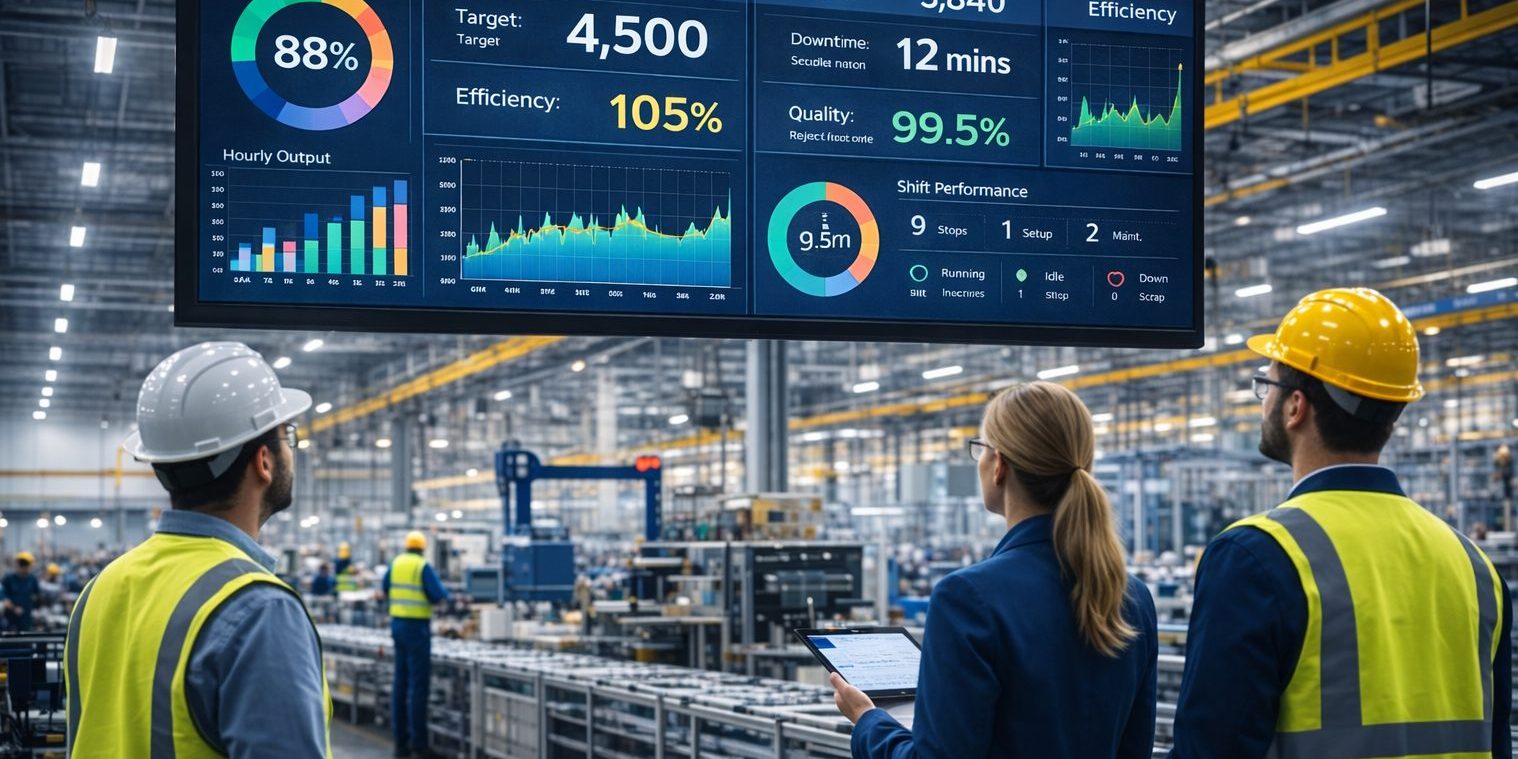
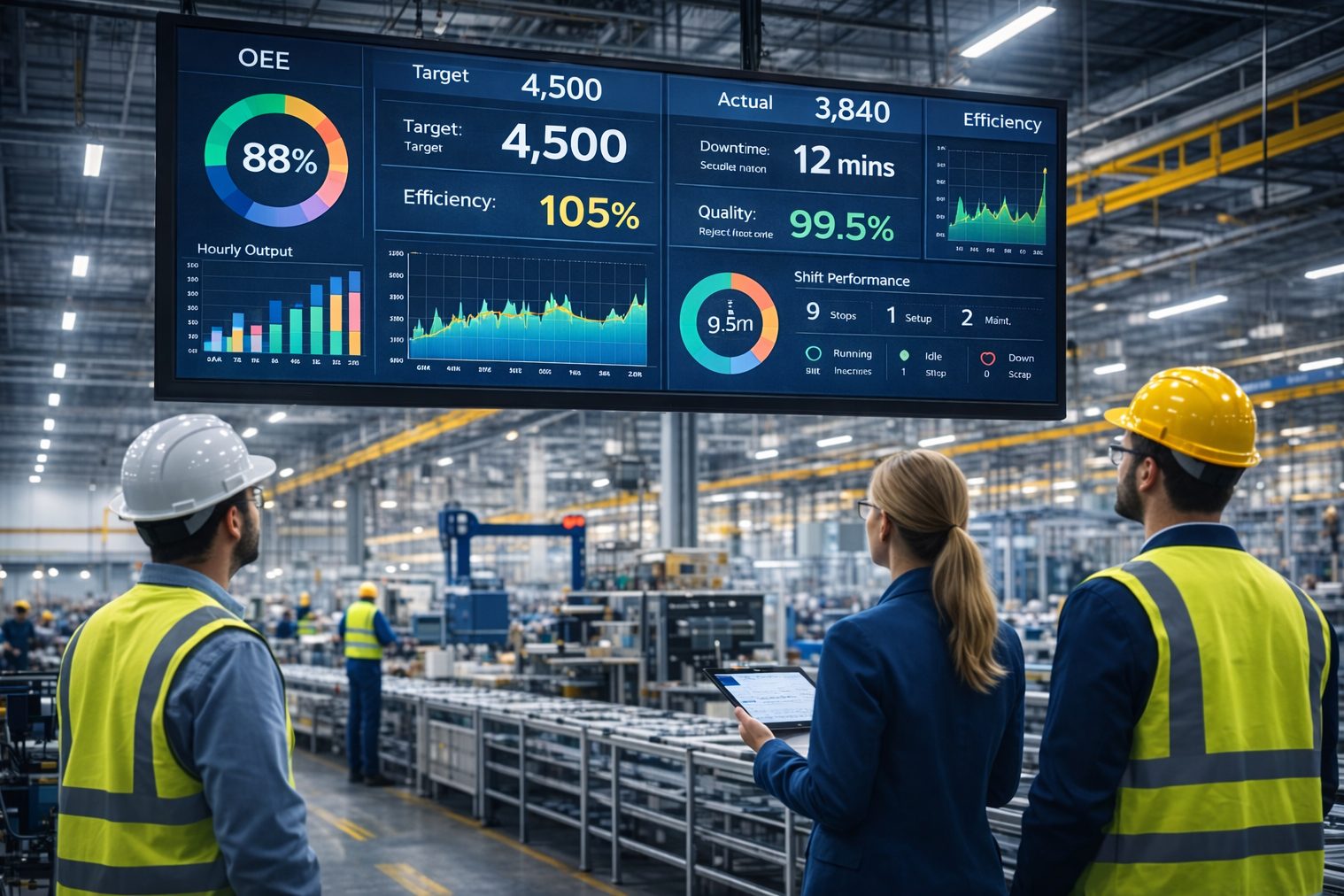
A smart factory might display production KPIs on the factory floor.
An office building might show real-time meeting room availability outside conference spaces.
Airports rely on screen networks to deliver continuously updated flight information and passenger guidance.
In each case, the screen communicates live operational information.
Where Digital Signage Infrastructure Is Used
Digital signage infrastructure is now widely used across multiple industries. Across these environments, screens function as operational communication tools rather than static displays.
- Corporate Workplaces
Screens display meeting room availability, internal announcements, and workplace updates. - Manufacturing and Industrial Facilities
Production dashboards and safety alerts help teams monitor operations. - Airports and Transportation
Passenger information displays provide real-time travel updates and navigation. - Healthcare Environments
Hospitals use screens for patient communication and operational messaging. - Universities and Campuses
Screens share event information, navigation, and campus announcements.
Building Smart Digital Buildings
When organizations depend on systems every day to operate, those systems become infrastructure. Networks, cloud platforms, and enterprise software are examples of infrastructure that support modern businesses. Digital signage is increasingly joining that category.
Using an open and scalable platform such as PADS4, organizations can unify digital signage, workspace management, visitor management, and wayfinding into a single communication ecosystem. The result is a Smart Digital Building, where screens act as intelligent endpoints that respond to real-time triggers such as meeting room bookings, occupancy levels, operational alerts, or environmental data.
Learn More About Enterprise Screen Networks
Digital signage is no longer simply a display technology. It is becoming communication infrastructure that connects people, data, and spaces across modern organizations. As workplaces become more connected and data-driven, digital signage infrastructure will continue to play a central role in how information moves between digital systems and the physical world.
If you want to understand how organizations deploy and manage hundreds or even thousands of screens across locations, read our Beginner’s Guide to Enterprise Screen Networks, which explains how modern screen networks are designed and scaled.
Frequently Asked Questions
What is the difference between digital signage and digital signage infrastructure?
Digital signage refers to the screens themselves, while digital signage infrastructure refers to the connected system of screens, software platforms, and data integrations that deliver real-time communication across environments.
Why do organizations use digital signage infrastructure?
Organizations use signage infrastructure to deliver operational updates, safety alerts, workplace communication, and real-time data directly within physical environments.
What systems can digital signage integrate with?
Modern digital signage platforms integrate with workplace booking systems, visitor management tools, ERP systems, building management platforms, IoT sensors, and enterprise APIs.